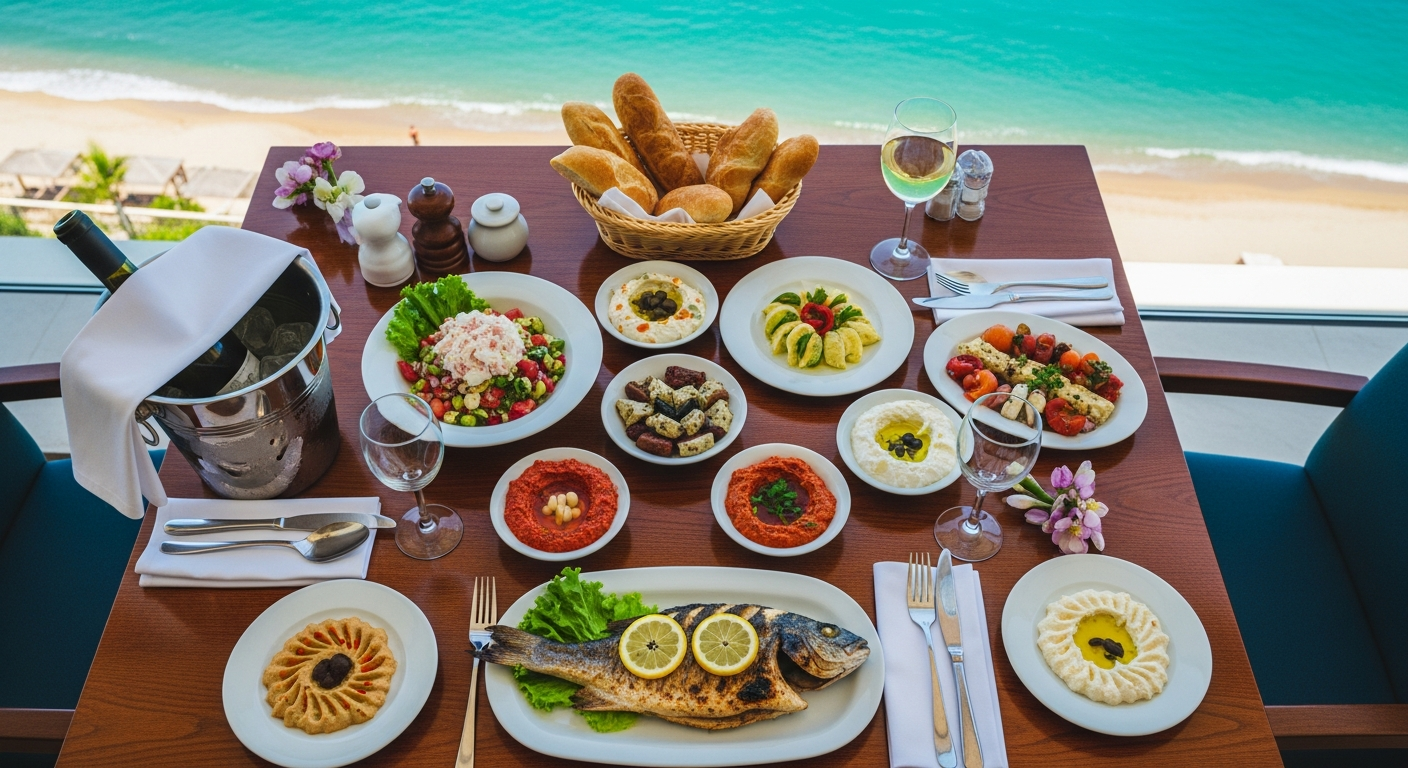
From smoky kebapche grills and seafront mussel pots to vegetarian-friendly mehana taverns and warm morning banitsa, here is exactly where and what to eat in Sunny Beach, Bulgaria.
✦ Quick Facts
Sunny Beach has a reputation for big nights and bigger party strips, but ask any returning visitor what keeps them coming back and the conversation drifts, surprisingly quickly, to the food. Bulgaria's largest Black Sea resort sits on a coastline that has been growing vegetables, pressing wine and grilling meat for thousands of years, and that heritage shows up on the plate. Between the smoky aroma of a charcoal grill, the tang of fresh white cheese crumbled over a salad, and a pot of Black Sea mussels steaming in garlic and wine, eating here can be one of the genuine highlights of a trip.
This guide cuts through the tourist-trap fast-food stalls to show you where to eat in Sunny Beach, what to order, and roughly what it should cost. Whether you are a committed carnivore chasing the perfect kebapche, a vegetarian wondering if you'll be stuck eating chips, or simply someone who wants good bread in the morning, the resort and its neighbours have you covered.
Understanding Bulgarian Cuisine Before You Order
To eat well in Sunny Beach it helps to understand what Bulgarian food actually is. It belongs to the broad Balkan and Eastern Mediterranean family — there are clear echoes of Greek, Turkish and Levantine cooking — but it has a strong identity of its own, built around grilled meats, garden vegetables, dairy and herbs. If you want to read more about its roots and regional variations, the overview of Bulgarian cuisine on Wikipedia is a good primer before you arrive.
The cornerstones you'll meet again and again are simple and seasonal. Sirene (a brined white cheese, similar to feta) and kashkaval (a yellow cheese) appear everywhere. Yoghurt is practically a national symbol and turns up in dips, soups and marinades. Vegetables — tomatoes, peppers, cucumbers, aubergine — are eaten fresh in summer and preserved as relishes for winter. And the grill, fired with charcoal, is the beating heart of almost every menu.
Crucially, Bulgarian restaurants serve food in a particular rhythm. You start with a cold salad and perhaps a shared starter, often with a shot of rakia (fruit brandy). Mains arrive when they're ready rather than all together, and there's no rush to clear the table. Lean into that pace — the slow, sociable meal is part of the experience, and it pairs perfectly with an evening that might later head toward the bars covered in our Sunny Beach nightlife guide.
The Dishes You Absolutely Have to Try
Some dishes are so central to the Bulgarian table that skipping them would be like visiting Italy and ignoring pasta. Here is a quick-reference table of the classics, what they are, and what you should expect to pay in a typical Sunny Beach restaurant.
| Dish | What it is | Approx. price |
|---|---|---|
| Shopska salad | Diced tomato, cucumber, pepper and onion topped with a snowdrift of grated white cheese | €3–5 |
| Kebapche | Grilled, seasoned minced-meat rolls (pork/beef) from the charcoal grill | €4–7 (per portion) |
| Mussels | Black Sea mussels cooked in white wine and garlic, or breaded and fried | €6–10 |
| Banitsa | Flaky filo pastry layered with white cheese and egg, eaten warm | €1–3 |
| Grilled fish | Whole-grilled sea bass, bream or local tsatsa (sprat), with lemon | €8–16 |
A few extras deserve a mention. Kyufte are the round cousins of kebapche — flattened, spiced meatballs that are equally grill-friendly. Kavarma is a slow-cooked clay-pot stew of meat, onions and peppers, intensely savoury and perfect on a cooler evening. Lyutenitsa, a thick relish of roasted peppers and tomatoes, gets spread on bread or served alongside grills. And on a scorching afternoon nothing beats tarator, a chilled soup of yoghurt, cucumber, garlic, dill and walnuts that doubles as a cooling drink-in-a-bowl.
Where to Eat: Mehana Taverns vs. Seafront Grills
Broadly, the dining scene in and around Sunny Beach splits into a few distinct camps, and knowing which is which saves you from disappointment.
The traditional mehana
A mehana is a Bulgarian tavern, usually decked out in rustic wood, woven textiles and the odd wagon wheel, and it is where you go for the real thing. The focus is grilled meats, clay-pot dishes, hearty salads and local wine, frequently accompanied by live folk music as the evening warms up. The best mehanas tend to sit a street or two back from the main promenade — once you step off the busiest tourist drag, prices drop and authenticity rises. These are the places to bring an appetite and settle in for a couple of hours.
Seafront and promenade grills
Along the beach itself, a string of restaurants trade heavily on their view. Quality varies, but the better ones do a roaring trade in fresh fish and seafood, grilling whole sea bass and serving those famous mussels with a backdrop of the Black Sea. You pay a premium for the location, but a sunset dinner with sand underfoot is a holiday memory worth the markup. After dinner you're perfectly placed for the activities in our things to do in Sunny Beach guide.
International and fast food
Inevitably, a resort this size also has pizza, burgers, English breakfasts, Indian curries and gyros on every corner. There's nothing wrong with a slice after a late night, but if international fast food is all you eat, you'll go home having missed the point. Treat it as a backup, not a default.
Old Nessebar — the seafood detour
For the single best seafood meal of your trip, take the short hop to neighbouring Old Nessebar, the UNESCO-listed peninsula of cobbled lanes and ancient churches. Its fish restaurants enjoy sea views on three sides and take their mussels and grilled catch seriously. It's an easy and rewarding outing — see our companion piece on getting from Sunny Beach to Nessebar for transport options and timings.
Where to Eat Mussels in Sunny Beach
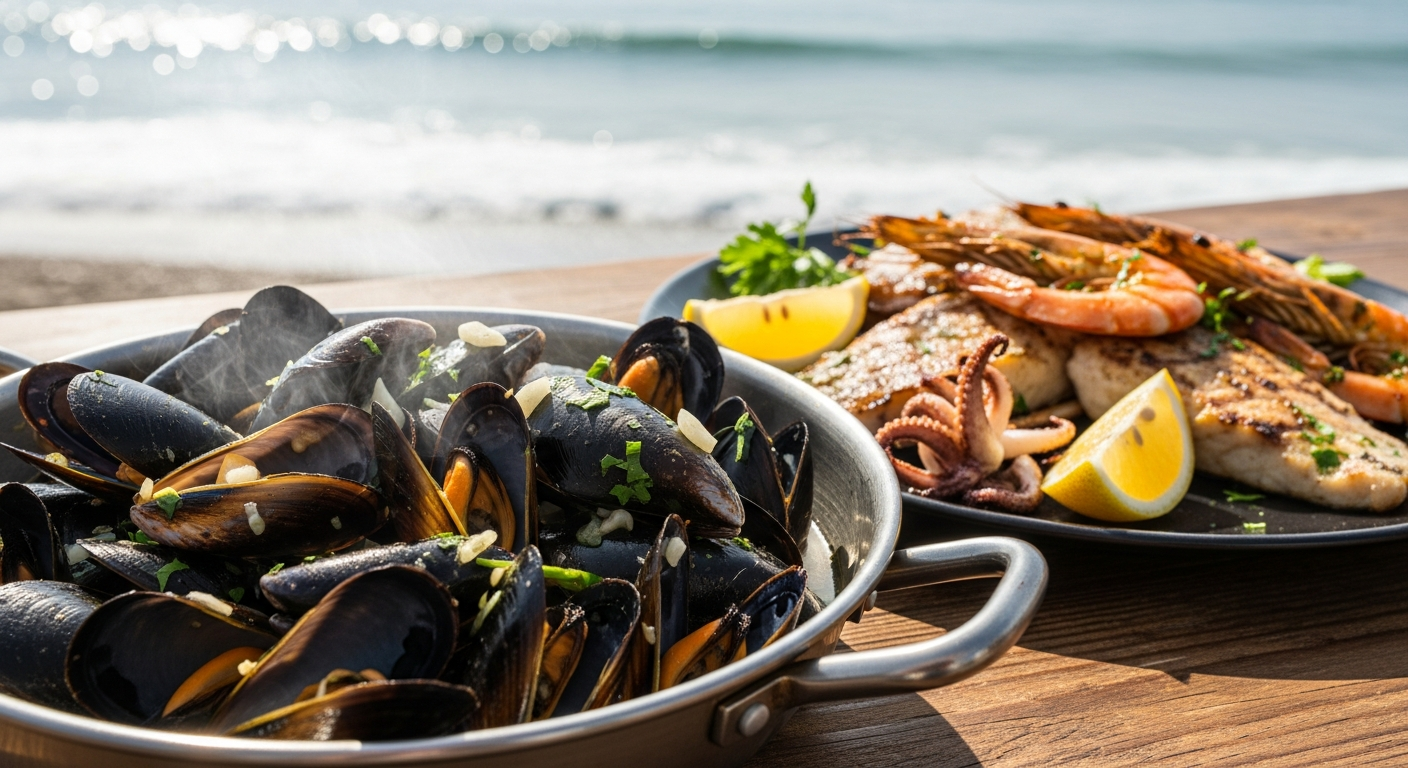
Mussels are one of the coast's quiet specialities, and they're a question we get asked constantly. Black Sea mussels are smaller and sweeter than their Atlantic cousins, and they're typically served two ways: steamed in a broth of white wine, garlic, butter and herbs, or shelled, breaded and fried into golden bites that arrive with a wedge of lemon.
The seafront grills along the Sunny Beach promenade do a reliable version, usually as a starter to share. But for the definitive plate, cross to Old Nessebar, where the fish restaurants source locally and cook to order. Expect to pay somewhere around €6–10 for a generous portion. Pair them with a crisp white from the Black Sea wine region and some warm bread to soak up every drop of the sauce — which brings us neatly to the bread question.
Is There Good Bread in Sunny Beach?
Yes — and it's one of the resort's underrated pleasures. Bulgaria has a serious baking culture, and you don't have to look hard to find it. The word to scan for is pekarna (bakery). These small shops open early, sell by weight, and are astonishingly cheap.
The undisputed star is banitsa, a coil or layered slab of flaky filo pastry filled with whisked egg and salty white cheese, eaten warm and ideally with a glass of ayran (a salted yoghurt drink) or boza (a fermented grain drink that divides opinion). Other things to grab from the counter include:
- Parlenka — a soft flatbread brushed with garlic, oil and cheese, perfect for sharing.
- Mekitsi — deep-fried dough, often dusted with sugar or served with jam and cheese, a classic Bulgarian breakfast.
- Pitka — a round, fluffy bread loaf, sometimes studded with cheese.
- Tutmanik — a richer, bready cousin of banitsa enriched with butter and cheese.
In restaurants, a basket of warm bread almost always accompanies your meal, ready for mopping up lyutenitsa, salad dressing or that glorious mussel broth.
Where Do Vegetarians Eat in Sunny Beach?
Vegetarians are often pleasantly surprised here, because Bulgarian cuisine is rich in naturally meat-free dishes — a legacy of Orthodox fasting traditions, which produce a whole category of vegan postni (fasting) food. You will rarely be reduced to ordering a sad plate of chips.
Reliable vegetarian orders include shopska salad, grilled vegetables, stuffed peppers with rice and herbs, bob chorba (a warming white-bean soup), gyuvech (a vegetable clay-pot bake), spinach-and-cheese banitsa, and an array of dips — lyutenitsa, kyopolou (roasted aubergine relish) and snezhanka (a thick yoghurt-and-cucumber dip). Many of these are vegan if you skip the cheese and yoghurt versions, and asking for the postni menu is a handy phrase.
Modern cafes and the larger seafront restaurants near the centre increasingly carry dedicated vegetarian and vegan sections, plus smoothies, plant-based burgers and salads aimed at health-conscious visitors. Combine a light vegetarian lunch with a stroll and you've got the makings of a perfect low-key day — pair it with the indoor and outdoor ideas in our Sunny Beach travel tips for getting the most from your stay.
Eating by Budget: From Bakery Snacks to Fine Dining
One of Sunny Beach's great strengths is that it caters to every wallet. Here's how the spending tiers tend to break down.
- Shoestring (under €5 a meal). Bakeries and street stalls. A banitsa, a slice of pizza, a gyros, a portion of mekitsi — fast, filling and almost comically cheap.
- Casual mehana (€8–15 a head). A salad, a grilled main and a beer or glass of wine in a traditional tavern set back from the strip. The sweet spot for value and authenticity.
- Seafront dining (€15–30 a head). Fresh fish, seafood platters and that all-important view, with table service and a wine list.
- Fine dining and Nessebar sea-view (€30+ a head). Whole grilled fish, seafood towers, attentive service and a romantic setting on the old-town peninsula.
Even at the top end, prices remain gentle compared with much of Western Europe, which is part of why so many visitors eat out every night. For more on currency, tipping and how far your money goes, our travel tips guide goes into detail. When you're ready to pick a specific venue, browse the listings on our restaurants page, and remember that many hotels include half-board options worth weighing against eating out.
Breakfast, Coffee, Sweets and Drinks
Breakfast in Sunny Beach ranges from the full international hotel buffet to a paper bag of warm pastry eaten on a bench by the sea. If you want to eat like a local, grab a banitsa and an ayran from a pekarna, or sit down for mekitsi with honey and white cheese.
Coffee culture is strong and espresso-based; a well-made cappuccino or freddo is easy to find and rarely expensive. For something sweeter, look out for garash (a dense walnut chocolate cake), baklava (a Balkan-Ottoman legacy) and seasonal fruit — the local cherries, peaches and watermelons in high summer are superb. Ice-cream parlours line the promenade and are a non-negotiable part of any afternoon.
No discussion of Bulgarian dining is complete without the drinks. Rakia, a potent fruit brandy distilled from grapes or plums, is the traditional accompaniment to a cold salad starter — sip it slowly. Bulgaria is also a serious wine country, with a history stretching back to the Thracians; the Black Sea coast produces crisp whites and rosés that pair beautifully with seafood, while the interior makes robust reds from local grapes like mavrud and rubin. If you'd like to understand the styles before you order, the background on Bulgarian wine is a useful read, and the same is true for the much-loved national spirit, rakia.
For something lighter, local lagers such as Kamenitza, Zagorka and Shumensko are cheap, cold and refreshing after a day on the sand. And if you're feeling adventurous, try boza or ayran with your morning pastry for the full local experience.
Beyond the Restaurant: Self-Catering and Menus
Markets, picnics and self-catering
Plenty of visitors stay in apartments with kitchenettes, and self-catering here is both cheap and genuinely enjoyable thanks to the quality of local produce. Larger supermarkets in and around the resort stock everything you'd expect, but the real fun is in the smaller shops and seasonal stalls. Look for crates of sun-ripened tomatoes, fragrant peppers, melons and stone fruit, plus deli counters piled with white cheese, kashkaval, cured lukanka sausage and tubs of fresh yoghurt and lyutenitsa.
A simple Bulgarian picnic is hard to beat: a wedge of banitsa, a tomato-and-cheese salad you assemble yourself, some crusty pitka bread, a handful of olives and a bottle of cold local white wine. Take it down to a quieter stretch of sand in the early evening and you have a meal that rivals any restaurant — for a fraction of the price. If you're driving in from elsewhere on the coast, a car rental makes it easy to reach the bigger markets in nearby Nessebar new town and Burgas, where choice and value improve further.
A word on water and ice: tap water is generally fine in the region, but many visitors prefer bottled mineral water, which is inexpensive and widely sold. Bulgarian mineral waters from the country's many natural springs are excellent and worth seeking out.
Reading a Bulgarian menu without stress
Menus in Sunny Beach are almost always printed in English (and often German and Russian) alongside Bulgarian, so you rarely need to translate. Even so, a handful of words unlock the experience. Skara means grill, so anything listed under it comes off the charcoal. Supa is soup, salata is salad, riba is fish and meso is meat. Dishes labelled na keramika or gyuveche arrive in a hot clay pot, while postni marks the meat-free, often vegan, options.
Don't be alarmed if portions of grills arrive on a shared platter or if your mains turn up at different times — that's normal, not a kitchen error. And if you're unsure what to order, asking your server for the house speciality almost always pays off; pride in the food runs deep, and most will happily steer you toward the best thing on the grill that night.
A Few Practical Tips for Dining Out
- Book ahead in peak season. In July and August, the best mehanas and Nessebar sea-view tables fill up; reserve for after 8pm.
- Check whether prices are per 100g. Whole fish and some grilled meats are sometimes priced by weight, so confirm the final cost before ordering.
- Tipping is appreciated. Rounding up or leaving around 10% is the norm for good service.
- Embrace shared starters. Order several salads and dips for the table — it's how Bulgarians eat and the best way to taste widely.
- Walk a block back. The further you get from the busiest stretch of promenade, the better the value and, often, the food.
Eating in Sunny Beach is far more rewarding than its party-resort reputation suggests. Beneath the neon and the fast-food signs lies a genuine, generous food culture built on the grill, the garden and the sea. Order the shopska salad, share a pot of mussels, tear into warm bread fresh from a pekarna, and toast the evening with a glass of coastal wine — and you'll discover that some of the best memories of a Black Sea holiday are made at the table.
Frequently Asked Questions
Where do vegetarians eat in Sunny Beach?
Vegetarians eat very well in Sunny Beach because so much of Bulgarian cuisine is naturally meat-free. Almost every mehana and restaurant serves shopska salad, grilled vegetables, stuffed peppers, lyutenitsa, bean stew (bob chorba) and fresh white cheese dishes. Larger seafront restaurants and the more modern cafes near the centre also list dedicated vegetarian and increasingly vegan sections, so you rarely need to ask for something off-menu.
Where can you eat mussels in Sunny Beach?
The best mussels are found at the seafront grills along the Sunny Beach promenade and, especially, in the fish restaurants of neighbouring Old Nessebar, where Black Sea mussels are cooked in white wine, garlic and herbs or breaded and fried. Order them as a starter to share; a generous pot or plate typically costs somewhere around €6–10 depending on the venue and the size of the portion.
Is there good bread in Sunny Beach?
Yes. Bulgaria has a strong baking tradition and you will find excellent fresh bread, warm banitsa (a flaky cheese pastry) and parlenka flatbread brushed with garlic and cheese. Small bakeries (look for signs reading 'pekarna') open early and sell pastries by weight for very little money, while restaurants usually bring warm bread to the table to mop up sauces and salad dressing.
Where should you eat in Sunny Beach for an authentic meal?
For the most authentic experience choose a traditional mehana (Bulgarian tavern) slightly back from the main strip, or cross into Old Nessebar for a sea-view table. These places focus on grilled meats, clay-pot dishes and local salads rather than international fast food, and they often have live folk music in the evening. Booking a table for after 8pm is wise in July and August.
How much does it cost to eat out in Sunny Beach?
Sunny Beach remains good value by Western European standards. A main course typically costs around €7–15, a shopska salad €3–5 and a local beer €2–3. A relaxed two-course dinner for two with drinks in a mehana usually lands somewhere around €30–45, while seafront and fine-dining venues with sea views cost noticeably more.
What traditional Bulgarian dishes should you try in Sunny Beach?
Start with a shopska salad and order kebapche (grilled minced-meat rolls) or kyufte, plus a clay-pot dish such as kavarma. Don't miss banitsa for breakfast, lyutenitsa as a spread, and tarator (cold cucumber-yoghurt soup) on a hot day. Wash it all down with local rakia or a Bulgarian wine from the Black Sea coast.
Ready to plan your Sunny Beach trip?
Browse hand-picked hotels, restaurants and experiences across the Bulgarian Black Sea coast.